
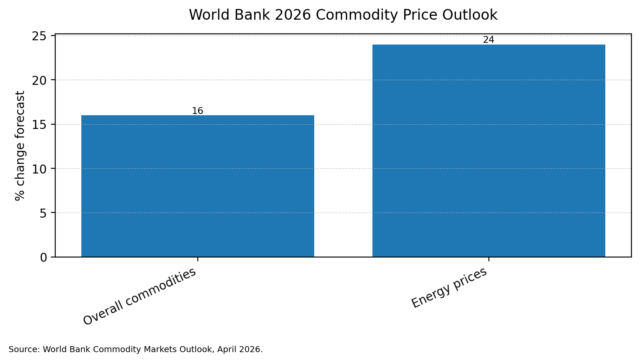
Commodity markets have changed direction under the pressure of conflict and energy disruption. The World Bank’s April 2026 Commodity Markets Outlook reported that overall commodity prices were forecast to rise by 16% in 2026, while energy prices were projected to surge by 24%. This is a major warning for companies that buy, sell or transport commodities across borders.
Energy is the most important driver because it affects nearly every other commodity. Higher crude and refined-product costs raise mining costs, fertilizer prices, trucking costs, shipping charges and processing expenses. Even when a commodity’s own supply is stable, the delivered price can increase because the logistics chain has become more expensive.
For African commodity traders, the key issue is delivered cost. Many deals fail not because the product cannot be sourced, but because freight, insurance, finance charges and documentation problems destroy the expected margin. In 2026, commodity pricing should be calculated from mine, farm or supplier to final delivery point, not just from the supplier’s invoice.
Firms should also pay attention to metals and minerals connected to industrial development, energy infrastructure and electrification. Ghana’s long-term ambition to create an integrated aluminium industry demonstrates the importance of moving beyond raw commodity export toward value addition. This trend is likely to shape investment opportunities in bauxite, alumina, aluminium, construction materials and industrial supply chains.
The strategic conclusion is clear: commodity companies need stronger intelligence, better documentation, more disciplined finance and reliable logistics partnerships. TRINEX can position itself as a bridge between supply, financing, compliance, transport and client delivery in a market where risk is rising but opportunities remain significant.