Ghana’s 24-Hour Economy Authority Bill, 2025 has moved from political concept to legal reality. Parliament debated the Bill in February 2026, and the Presidency announced that President John Dramani Mahama assented to it on 19 February 2026. Parliament’s explanation of the Bill described its object as establishing an authority for integrated and sustainable transformation of production, supply-chain, marketing and labour systems.
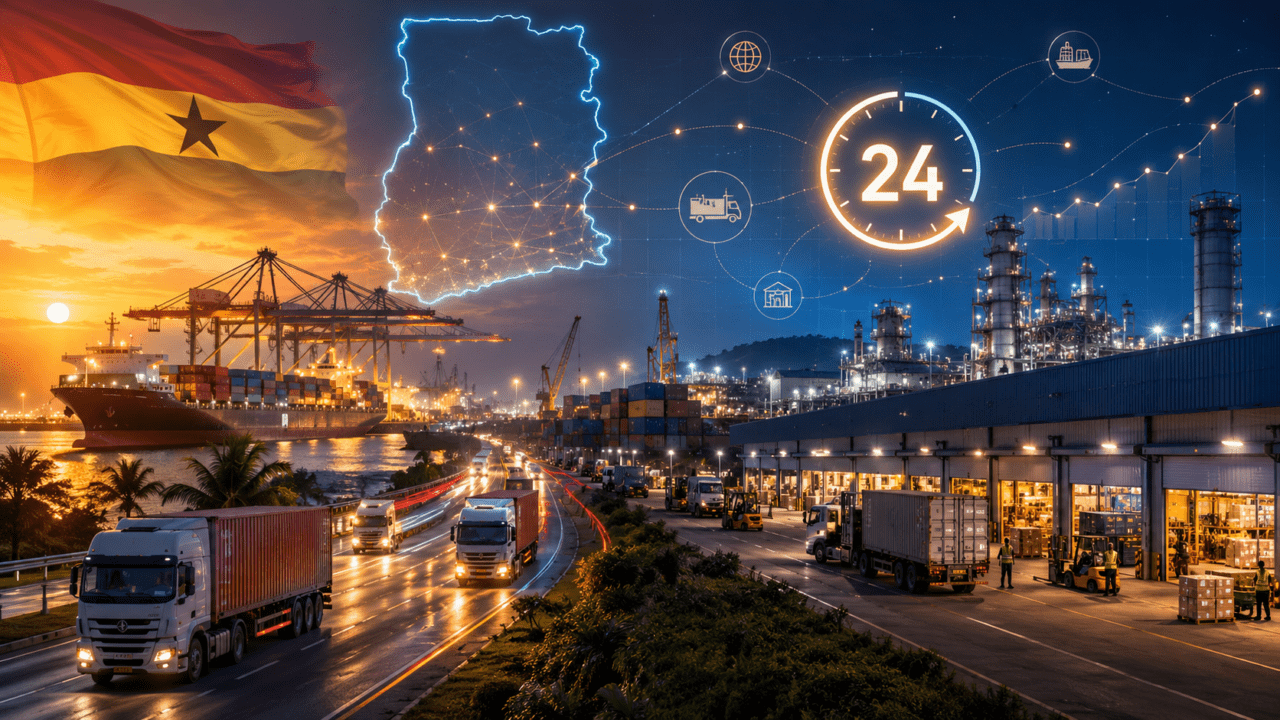
For energy, commodities and logistics companies, this matters because a 24-hour economy depends on reliable movement of goods, fuel, services and information. Longer operating hours can expand production and trade, but only if ports, customs, transport, warehousing, security, finance and energy supply can support the model.
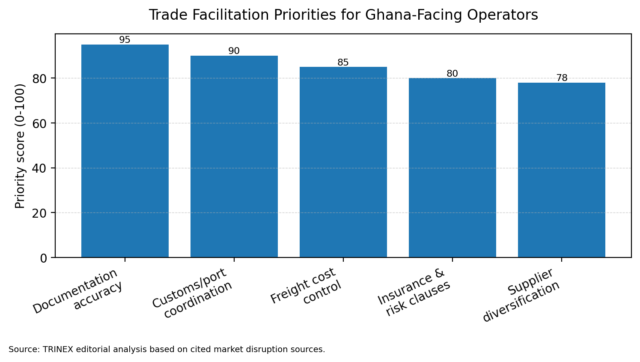
The business opportunity is not only in working longer hours. It is in creating systems that make longer-hour operations commercially viable. This includes better documentation, faster clearance, dependable fuel supply, night logistics, warehouse coordination, digital tracking and stronger client communication.
There are also compliance issues. Companies must align with labour rules, safety standards, insurance requirements and sector-specific regulations. Poorly managed 24-hour operations can increase accidents, theft, fatigue, fraud and documentation errors. Therefore, the opportunity must be matched with strong governance.
TRINEX can position itself as a partner for businesses preparing for round-the-clock commerce: helping clients arrange energy supply, commodities movement, logistics coordination, financial documentation and trade facilitation. The companies that win under Ghana’s 24-hour economy will be those that combine ambition with systems, compliance and execution discipline.