
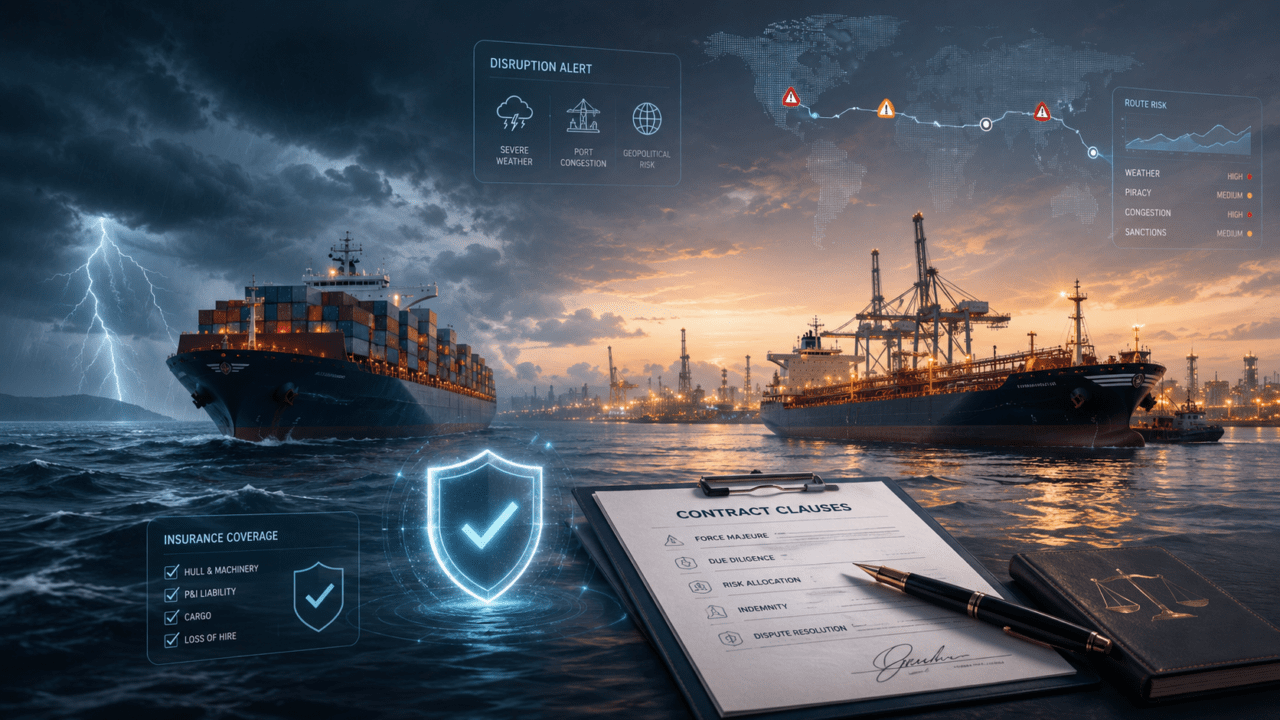
Shipping disruption has made contract language more important. Red Sea diversions, Middle East conflict risk, higher fuel costs and port congestion can all affect delivery schedules and costs. If contracts do not clearly define responsibilities, a profitable trade can turn into a dispute.
Companies should review clauses covering force majeure, war risk, delay, demurrage, insurance, title transfer, Incoterms, payment timing, inspection and dispute resolution. A clause that looked sufficient in a stable market may be weak in a disrupted environment. For example, who pays if a carrier avoids the Red Sea and reroutes around Africa? Who bears extra insurance cost? What happens if arrival is delayed by two weeks?
Insurance should also be reviewed carefully. Cargo insurance, marine war risk, political risk and liability coverage may not respond in the same way. Businesses should not assume that “insured” means fully protected. The policy wording, exclusions and declared route matter.
The Red Sea and Middle East disruptions also show why communication records are important. Email trails, booking confirmations, vessel updates, inspection records and notices to clients can become critical evidence if a delay becomes a claim.
For TRINEX, this is an opportunity to help clients operate professionally. Trade facilitation should include documentation discipline, risk allocation advice and coordination between supplier, freight forwarder, insurer, bank and buyer. In 2026 logistics, the contract is as important as the cargo.