
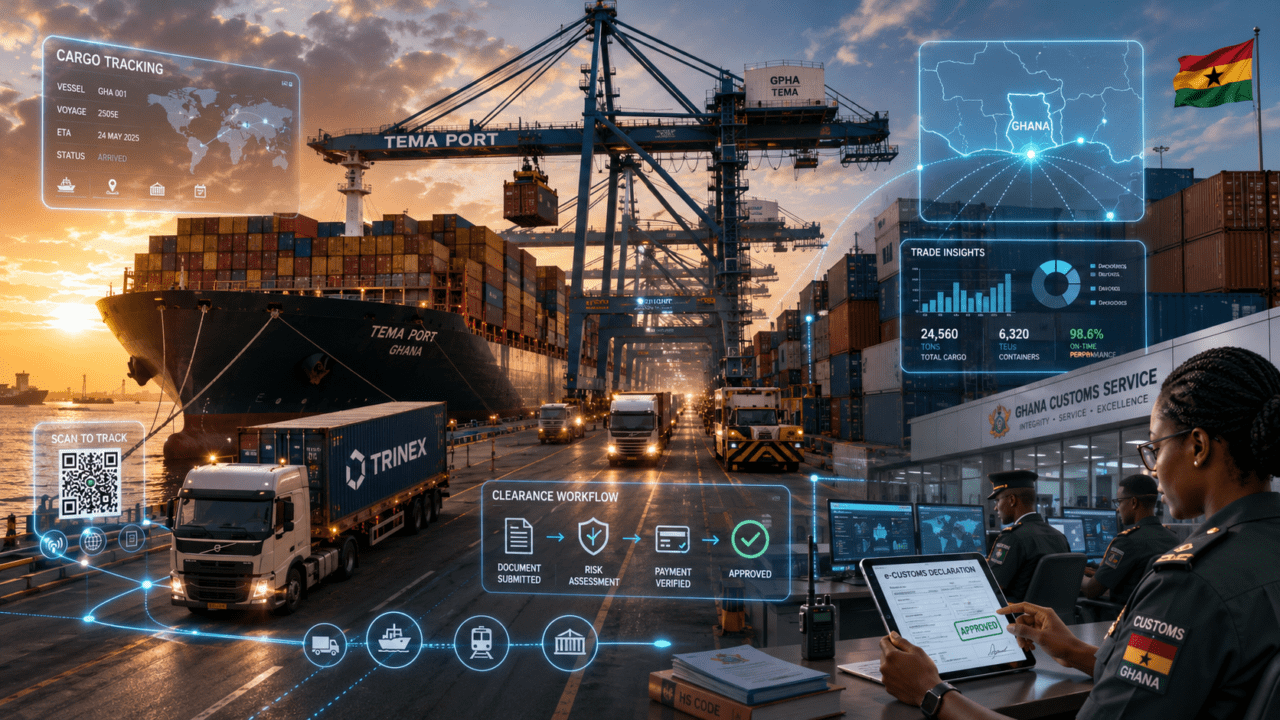
Ghana’s port and customs environment remains central to the country’s trade competitiveness. Tema Port is widely recognised as Ghana’s leading maritime gateway, and research has described it as handling approximately 85% of Ghana’s trade while also serving landlocked neighbours such as Burkina Faso, Mali and Niger. This makes port efficiency a national economic issue, not just a shipping concern.
Trade facilitation is about reducing friction. Every delay in documentation, customs processing, delivery order issuance, inspection, payment or cargo release adds cost. For importers, delays can mean demurrage, storage, contract penalties and production interruption. For exporters, delays can mean missed vessel schedules, damaged buyer confidence and cash-flow pressure.
Ghana’s trade facilitation agenda includes port stakeholder coordination, digital systems and regional cooperation. These reforms are important, but private-sector discipline is equally necessary. Even the best digital platform cannot correct inaccurate documents, wrong HS codes, weak supplier paperwork or poor communication between buyer, seller, freight forwarder and clearing agent.
Businesses should treat documentation as a strategic control point. Commercial invoices, packing lists, certificates of origin, bills of lading, permits, insurance certificates and payment instruments must be checked before shipment, not after arrival. A proactive review can save days or weeks at port.
For TRINEX, trade facilitation should be presented as an integrated service: document preparation, compliance checking, stakeholder coordination, cargo visibility and problem resolution. In modern trade, facilitation is not paperwork; it is the difference between smooth delivery and costly disruption.