
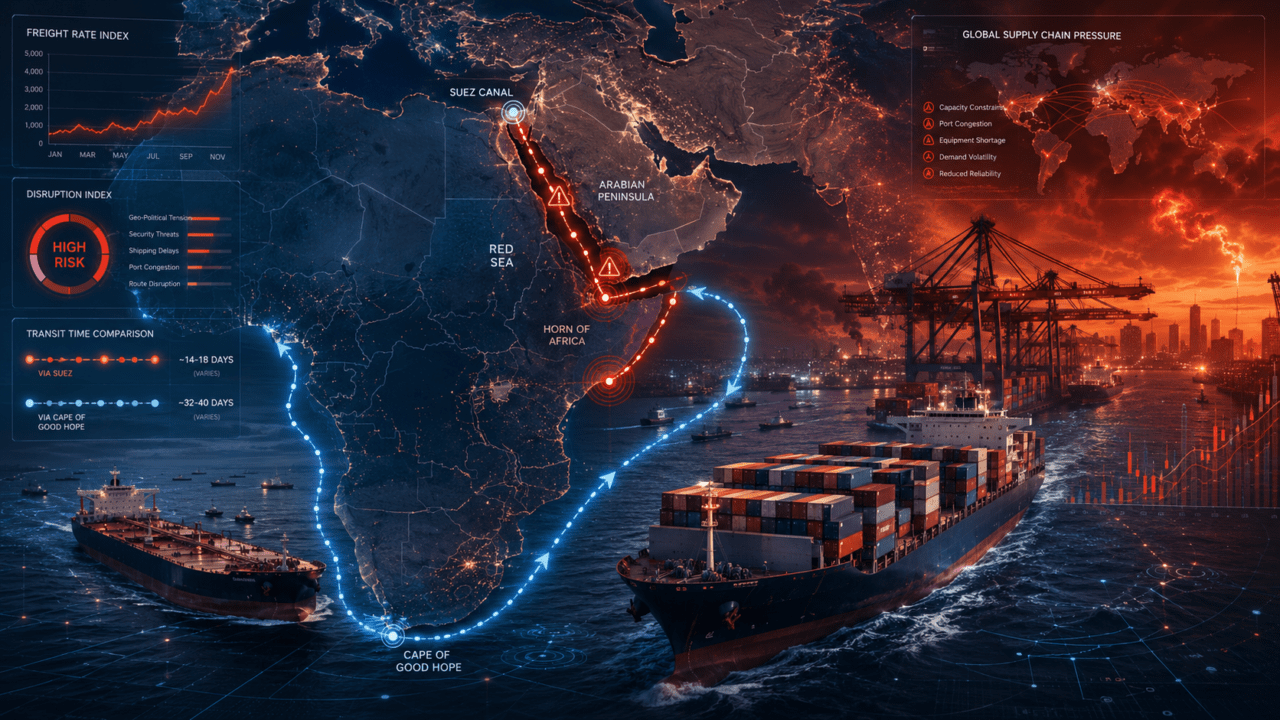
The Red Sea disruption has become one of the most important logistics stories of recent years. Ships avoiding the Suez and Red Sea routes often divert around the Cape of Good Hope, adding distance, fuel consumption, transit time and schedule uncertainty. UNCTAD has warned that maritime trade is under pressure from conflict, tariffs and route disruption, with longer routes becoming part of a fragile new operating reality.
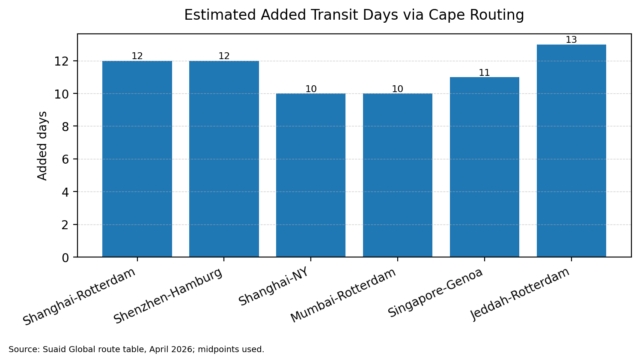
Route-level estimates show the practical impact. In 2026, Asia-to-Europe and related lanes can face roughly 8 to 14 additional days when cargo is routed around the Cape. For importers, those days are not just a delay; they represent inventory carrying costs, delayed revenue, possible stockouts, higher insurance exposure and increased demurrage risk.
For Ghanaian and West African businesses, the Red Sea issue affects procurement from Asia, Europe and the Middle East. A container, spare part or industrial input that arrives late can delay production, construction, mining operations or client delivery. Logistics teams must therefore stop treating ETA as a fixed promise and start treating it as a risk variable.
The right response is not panic; it is planning. Importers should demand better visibility from freight forwarders, build buffers into delivery promises, update landed-cost models weekly and compare routing options before confirming purchase orders. Contracts should also define who bears the cost of rerouting, insurance adjustments and port delays.
Trade facilitation providers can add value by coordinating shipping documents, customs preparation, carrier communication and alternative routing. TRINEX should frame logistics support as risk reduction, not simply transport arrangement. In a world of unstable routes, the business that controls information controls outcomes.