

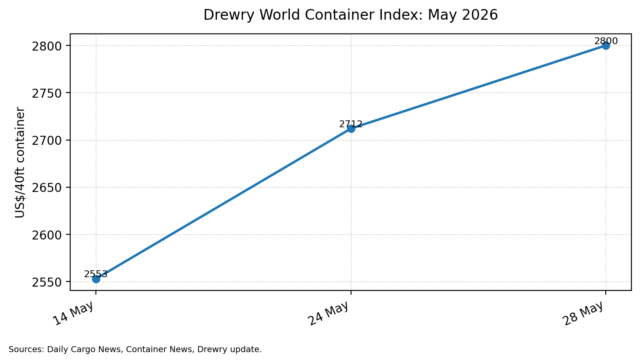
Container freight rates remain highly sensitive to disruption, capacity management and fuel costs. Drewry’s World Container Index rose during May 2026, reaching US$2,553 per 40ft container around 14 May, about US$2,712 later in the month, and US$2,800 by 28 May. The numbers show that even when markets are not at pandemic-era extremes, volatility can still move quickly enough to affect trading margins.
The problem for importers and exporters is timing. A quotation may be profitable when freight is estimated, but the profit can weaken if the shipment is booked days later at a higher rate. This is especially dangerous when contracts are signed on fixed delivered prices without freight adjustment clauses.
Freight cost also affects competitiveness. A trader with better shipping intelligence can quote more accurately, avoid unnecessary delays and protect clients from hidden charges. A trader without this discipline may win business at the quote stage but lose money at execution. The difference is not luck; it is operational control.
Companies should separate product price, freight, insurance, duties, port charges and local delivery into visible cost lines. They should also track weekly container indices, secure forwarder estimates early, and maintain alternative carrier relationships. For sensitive shipments, it may be better to pay a premium for reliability than to gamble on the cheapest quote.
For TRINEX, the freight-rate environment creates a practical advisory opportunity. Clients want certainty, not excuses. A strong logistics and trade facilitation offering should include landed-cost modelling, route-risk analysis, documentation checks and proactive communication from purchase order to final delivery.