
The global energy market has moved from a price-cycle story to a risk-management story. The conflict involving Iran and the wider Middle East has placed a lasting premium on crude oil, refined products, marine fuel, insurance, freight and working capital. For Ghanaian and West African importers, this means energy procurement can no longer be treated as a simple spot-price decision. It must be managed as a strategic exposure that affects cash flow, client pricing and contract delivery.
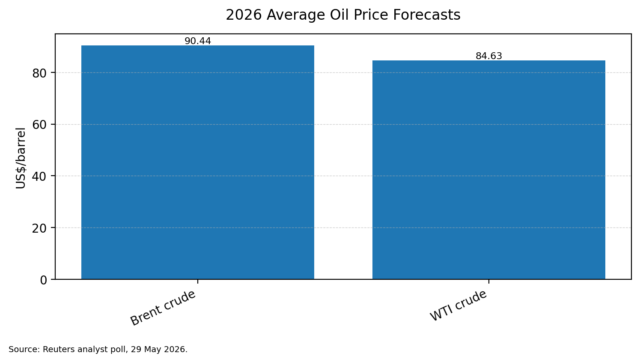
Current market forecasts show the scale of the shift. A Reuters analyst poll published on 29 May 2026 placed average Brent crude at US$90.44 per barrel for 2026 and WTI at US$84.63 per barrel. The figures matter because many downstream petroleum, transport and commodity contracts are priced directly or indirectly through global crude, freight and foreign-exchange assumptions. When oil stays high, every part of the supply chain becomes more expensive: fuel, trucking, port operations, shipping surcharges and inventory financing.
The first lesson for energy and commodities companies is that “cheap oil” assumptions can create hidden losses. A supplier may quote competitively today, but if the contract has no adjustment mechanism for fuel, FX, freight or insurance, the margin can disappear before delivery. Companies dealing in petroleum products, industrial commodities and logistics should therefore build pricing models that can absorb volatility rather than react to it after the fact.
The second lesson is that supply certainty has become as important as price. A slightly higher-priced supplier with reliable documentation, loading capacity, insurance cover and confirmed logistics may be safer than a cheaper supplier exposed to chokepoint delays. For companies like TRINEX, this creates an opportunity to position service delivery around verified sourcing, structured trade facilitation and risk-aware execution.
Practical action points: review all fuel-linked contracts, include escalation clauses, separate product price from freight and insurance components, diversify suppliers where possible, and use current market intelligence before committing to long-term delivery obligations. In today’s market, the winning operator is not simply the one that finds the lowest price, but the one that protects clients from avoidable disruption.